What are free trade agreements?
Free trade agreements (also known as foreign trade agreements, or FTAs for short) are subject to an international treaty that sets out decisions on trade between two or more countries. The aim of the agreement is to increasingly reduce barriers to trade between countries. These include tariff barriers to trade, i.e. customs duties for the import of goods in the partner country, as well as non-tariff barriers to trade, for example:
- Restrictions on the movement of goods
- import quotas
- subsidies
However,free trade agreements can also aim to establish common standards for intellectual property or investment protection.
Difference between free trade agreements and customs unions
Important: Despite a free trade agreement, countries retain their autonomy when it comes to trade issues with third countries. This is precisely what distinguishes a free trade area – i.e. an area between several states with a corresponding agreement – from a customs union. Therefore, not every free trade agreement is immediately a customs union, but every customs union is also a free trade agreement.
Free trade agreements in contrast to other trade agreements
Strictly speaking,free trade agreements also differ in content from other types of trade agreements. Economic Partnership Agreements (EPAs) focus on economic growth in certain regions, including Africa and the Caribbean. An association agreement, on the other hand, covers many different intergovernmental decisions at a political level.
Last but not least, there are also partnership and cooperation agreements (PCAs), which exist primarily between the European Union and many Eastern European and Central Asian countries. At the heart of these agreements are a wide range of arrangements in areas such as trade, science, migration and organized crime. In return, the EU contracting partners benefit from cooperation on EU decisions.
What types of free trade agreements are there?
There are basically three different types of EU free trade agreements , depending on the composition of the contracting states:
- Bilateral: free trade agreements between two countries
- Multilateral: free trade agreements between all WTO member states
- Plurilateral: free trade agreements with a specific focus between selected WTO member states
Current agreements and their status
Agreements in force
🇯🇵 Japan (JEFTA/EPA) – since 2019
- Largest free trade area in the world (since 01.02.2019)
- Market access to 125 million consumers
- Particularly advantageous for: Automotive sector, chemicals/pharmaceuticals, mechanical engineering, consumer goods

🇨🇦 Canada (CETA) – provisional since 2017
- Germany ratified in early 2023
- Several EU member states are still pending
- Focus on jobs, growth and environmental standards

🇸🇬 Singapore (EUSFTA) – since 2019
- Divided into separate trade and investment agreement
- Focus: finance, services, transportation, telecommunications

🇻🇳 Vietnam (EVFTA) – since 2020
- Provisionally in force since 2020
- Advantageous for chemicals/pharmaceuticals, consumer goods, food, mechanical engineering

🇲🇽 Mexico – since 2000, modernization ongoing
- Originally 2000 for industrial goods
- New negotiations since 2016 for expanded areas
- Planned expansion to include agriculture, services, environmental standards

🇰🇷 South Korea – since 2011, modernized/revised on an ongoing basis
- Comprehensive FTA since 2011, extensive tariff dismantling for industrial goods
- Served as a blueprint for later “modern” EU agreements (e.g. Japan, Vietnam)
- Ongoing reviews/adjustments to rules of origin, services and sustainability chapters

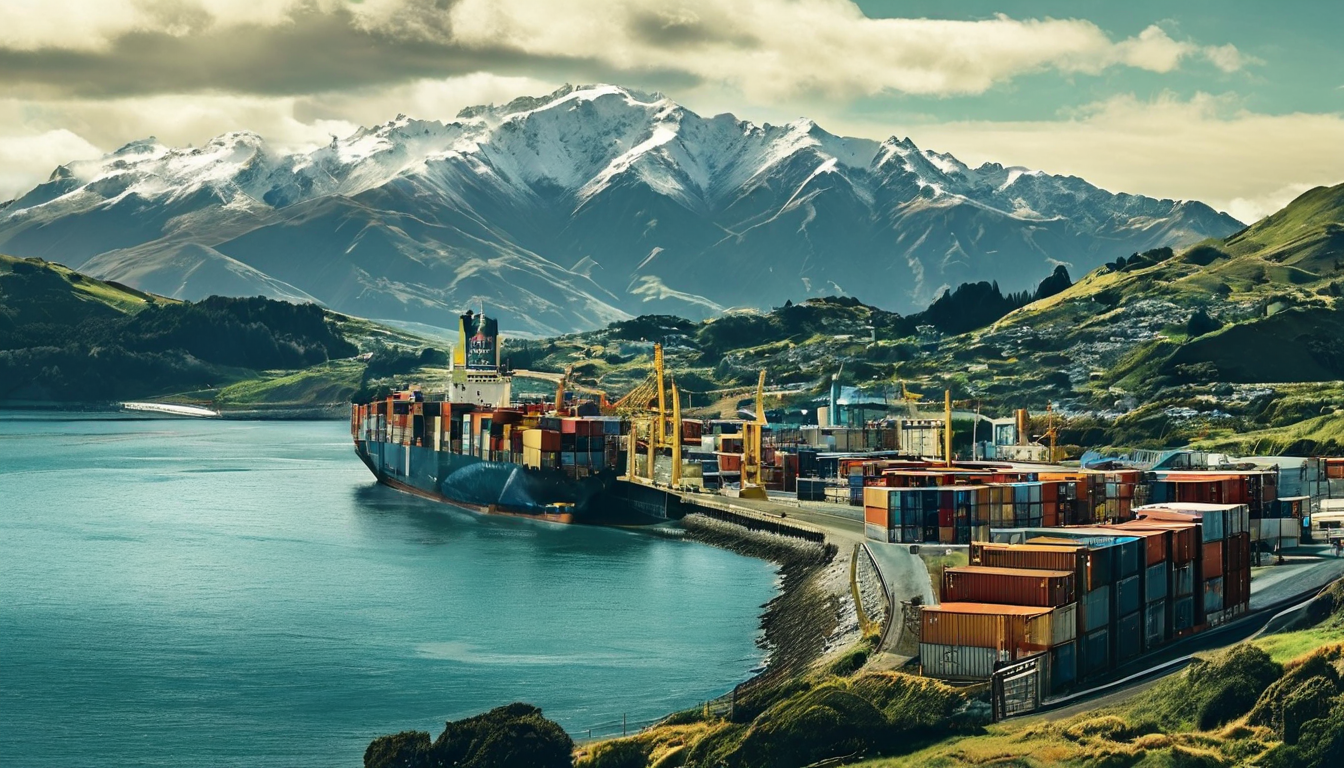
🇳🇿 New Zealand – in force since May 2024
- Expected trade growth of up to 30%
- Modern generation of agreements with sustainability and equality provisions
- Rules have been created for simplified and secure digital trade, facilitating data flows and preventing unjustified data localization requirements
🇬🇭 Ghana – since 2021, interim EPA in force
- Economic Partnership Agreement (EPA) with asymmetric market opening
- Preferential tariffs for agricultural and fishery products
- Gradual liberalization for EU goods Rules of origin and preferences relevant for cocoa/processed goods and textiles
Breakthrough in protracted negotiations

🇮🇳 India – EU-India Free Trade Agreement (FTA)
Status: Negotiations at an advanced stage (as of February 2026)
A market with enormous potential
With over 1.4 billion people and one of the fastest growing economies in the world, India is a strategic partner for the EU. Negotiations have been ongoing since 2007 and are now at an advanced stage. A conclusion is targeted for 2026 or 2027.
The current trade volume between the EU and India is around 120 billion euros per year. A free trade agreement could increase this volume by 20-30%.
The key points
What is being negotiated:
- Reduction of tariffs on industrial products, chemicals and mechanical engineering
- Better access to India’s services market (IT, financial services)
- Protection of patents and geographical indications of origin
- Binding standards for environmental protection and workers’ rights
Of particular interest to German companies:
- Mechanical engineering and Industry 4.0
- Pharmaceuticals and chemicals
- Renewable energies
- IT and digital services
The challenges
India likes to protect its own industry – especially in agriculture and textiles. Geographical indications of origin are also a sticking point. Nevertheless, economic experts believe that the opportunities clearly outweigh the risks.
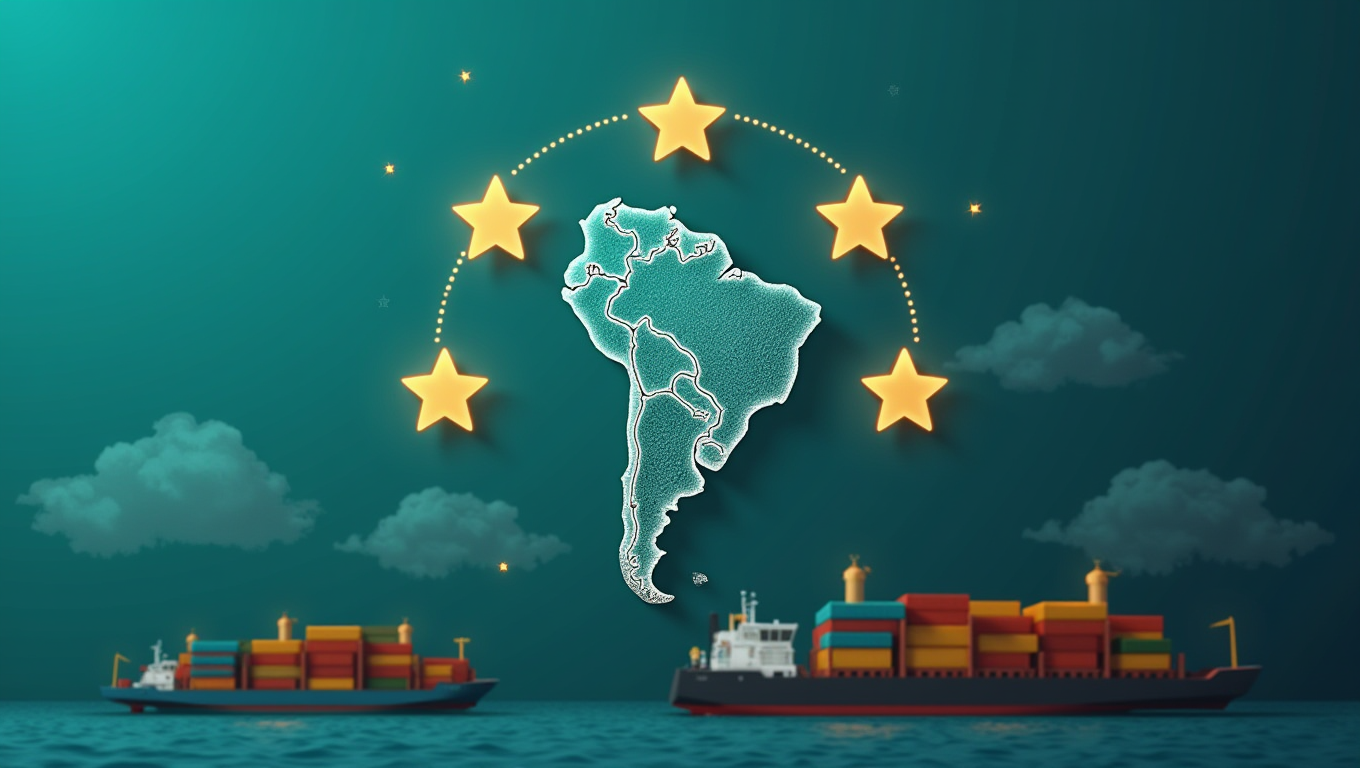
🌎 EU-Mercosur free trade agreement – a historic breakthrough after 25 years
Status: Provisional applicability imminent – ratification process underway
Provisional applicability stopped in the starting blocks
After 25 years of negotiations, political agreement was reached in December 2025. In January 2026, the European Parliament gave the green light. And now the next milestone: on February 27, 2026, EU Commission President Ursula von der Leyen announced the provisional application of the agreement – while formal ratification by all EU member states is still underway.
However, the EU Commission has not yet decided when exactly this will happen. The reason for this is likely to lie in the European Parliament. The MEPs have initially submitted the agreement to the European Court of Justice for review. However, this process is likely to take at least several months.
EU-Mercosur agreement – facts and figures
With a combined GDP of over 20 trillion euros and an existing trade volume of 88 billion euros per year between the EU and Mercosur, the largest free trade area in the world is being created here.
Tariff dismantling and market access:
- 91% of all industrial tariffs are eliminated immediately
- Up to 35% tariff savings on machinery and equipment
- Simplified access to public tenders in Argentina, Brazil, Paraguay and Uruguay
- Protection of intellectual property according to EU standards
Benefit in particular:
- Mechanical and plant engineering
- Automotive industry
- Chemical and pharmaceutical sector
- Environmental technology and renewable energies
Focus on sustainability
The agreement contains binding climate protection requirements and mechanisms to protect the rainforests. For German companies that already rely on sustainable products, this is a clear competitive advantage.
The next step: full ratification
The provisional application is a great success, but the formal ratification process is still ongoing. On February 26, 2026, the agreement was ratified in Montevideo and Buenos Aires with clear majorities. All 27 EU member states still have to follow suit – and some are skeptical. Realistically, full ratification could take until 2027.
Recently concluded agreements
🇦🇺 EU–Australia – Agreement Signed (March 24, 2026)
After eight years of negotiations, EU Commission President Ursula von der Leyen and Australian Prime Minister Anthony Albanese signed the Free Trade Agreement on March 24, 2026 in Canberra.
What has been agreed?
- Tariff elimination on nearly all goods on both sides – exception: steel
- Improved market access for EU service providers and facilitated mutual investments
- Equal participation of European companies in public tenders in Australia
- Beef import quota for Australia: 30,600 tonnes (split between grass-fed and conventional beef) – less than the 50,000 tonnes Australia had originally sought
Economic Significance
- Current trade volume: €89.2 billion annually (goods + services)
- EU exports to Australia (2025): €37 billion (goods) + €31 billion (services, 2024)
- Expected tariff savings for EU companies: over €1 billion annually
- Projected growth in bilateral trade: +30% over the next 10 years
Strategic Importance for Germany & the Machinery Sector
- Australia is the world’s largest lithium supplier – the EU secures access to critical raw materials and reduces dependence on China
- German mechanical engineering, chemicals and automotive industries are among the direct beneficiaries
- Von der Leyen emphasized: the agreement diversifies EU trade relations in light of aggressive US tariff policies
Next Steps
- Legal review and translation into all 24 EU official languages (several months)
- Ratification by the European Parliament and the EU Council
- Ratification by the Australian Parliament
Sources:
- European Commission – The EU-Australia Trade Agreement (24.03.2026)
- EU Trade Policy – EU-Australia Agreement (24.03.2026)
- USDA FAS – Australia and EU Finalize Free Trade Agreement (24.03.2026)
- KPMG – Australia and EU Finalize Free Trade Agreement (24.03.2026)

🇮🇩 Indonesia (CEPA) – Conclusion September 2025
Historic breakthrough after ten years of negotiations After long negotiations, which intensified due to the rise in trade tensions between the USA and other countries, Indonesia and the European Union concluded a historic free trade agreement in September 2025. The Comprehensive Economic Partnership Agreement (CEPA) was signed by representatives of both parties in Bali in September 2025.
Economic significance and market potential The CEPA creates a free trade area with over 700 million consumers . Indonesia, as the largest economy in Southeast Asia with over 270 million inhabitants, offers enormous market potential for European companies . The agreement will significantly strengthen European trade and investment in this strategically important region.
Tariff reduction and affected sectors The agreement will almost completely abolish customs duties on EU goods imported into Indonesia. This applies, among other things, to:
- Automotive industry: German car manufacturers in particular will benefit from the elimination of import duties
- Mechanical engineering and industrial equipment: Easier market access for European technology
- Chemical industry: Reduced trade barriers for chemicals and pharmaceuticals
Strategic importance in a geopolitical context The agreement is particularly important against the backdrop of escalating trade tensions between the USA and other countries. It strengthens the EU’s position in the strategically important ASEAN region and offers an alternative to traditional trade routes. The CEPA is expected to reshape exports, foreign direct investment (FDI) and market access for foreign companies in both regions.
Implementation and outlook The agreement is to be implemented gradually, with the first trade facilitation measures potentially taking effect as early as 2025. The agreement significantly boosts the export hopes of both sides and is seen as a milestone for future trade relations between Europe and Southeast Asia.
Ongoing negotiations

🇦🇪 United Arab Emirates – Negotiations since May 2025
- Start of formal EU free trade negotiations (FTA/CEPA-oriented)
- Focus on goods, services, investment and sustainability
- Diversification beyond oil, facilitation for industry and high-tech

🇹🇭 Thailand – negotiations reactivated in 2024
- Focus: Market access for goods/services, TBT/SPS, sustainability
- Status 2025: ongoing rounds, rapprochement on industrial tariffs; further talks on procurement/data flows
Regional agreements and trading systems
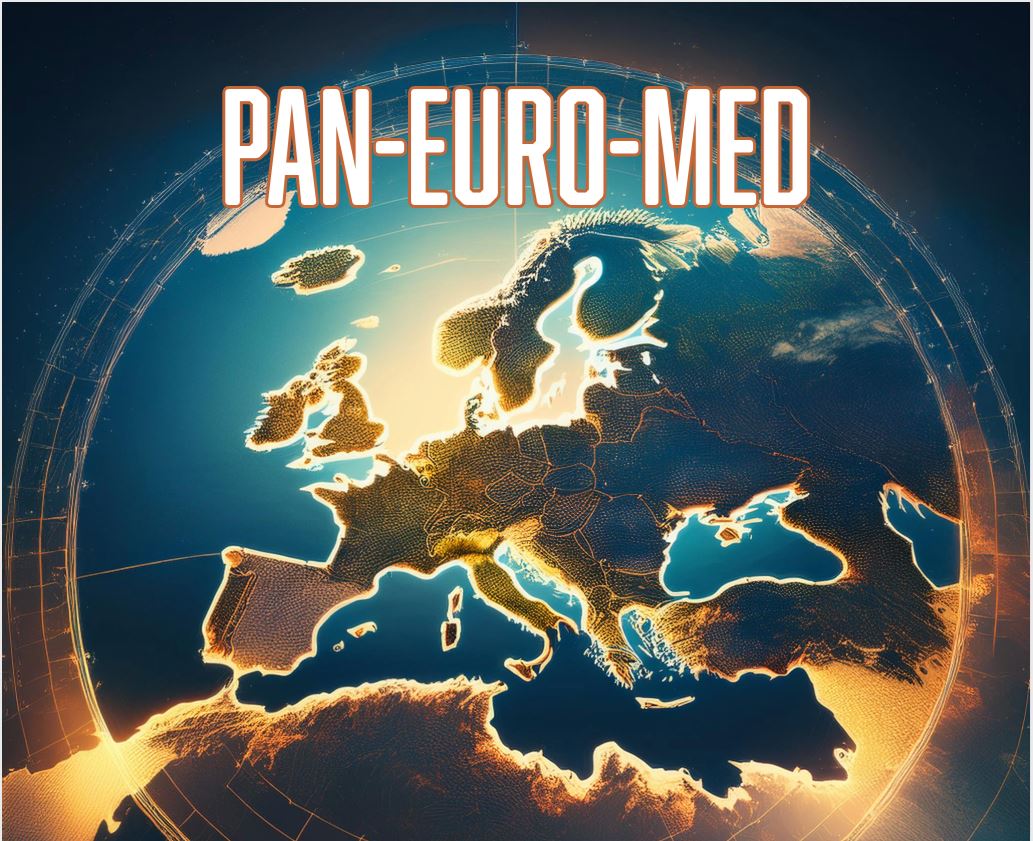
🗺️ PAN-EURO-MED – since 1997, ongoing modernization/digitization
- Network of cumulative rules of origin between the EU, EFTA, Turkey, the Balkans, and the Mediterranean
- Enables cross-border value chains and cumulation of origin
- Current: digitization of proof of preference (REX system), expansion to include new partners
Economic opportunities for EU companies
The trade agreements offer:
- Additional market development in new regions
- Elimination of customs duties and reduced bureaucracy
- New investment opportunities
- Increased competition as a driver of innovation
- Wider product range and lower prices for consumers
Current challenges
EU trade strategy is evolving in the context of new geopolitical realities, including changing US trade policy and the need to reduce dependencies on individual countries such as China.